St Andrews by-the-Sea
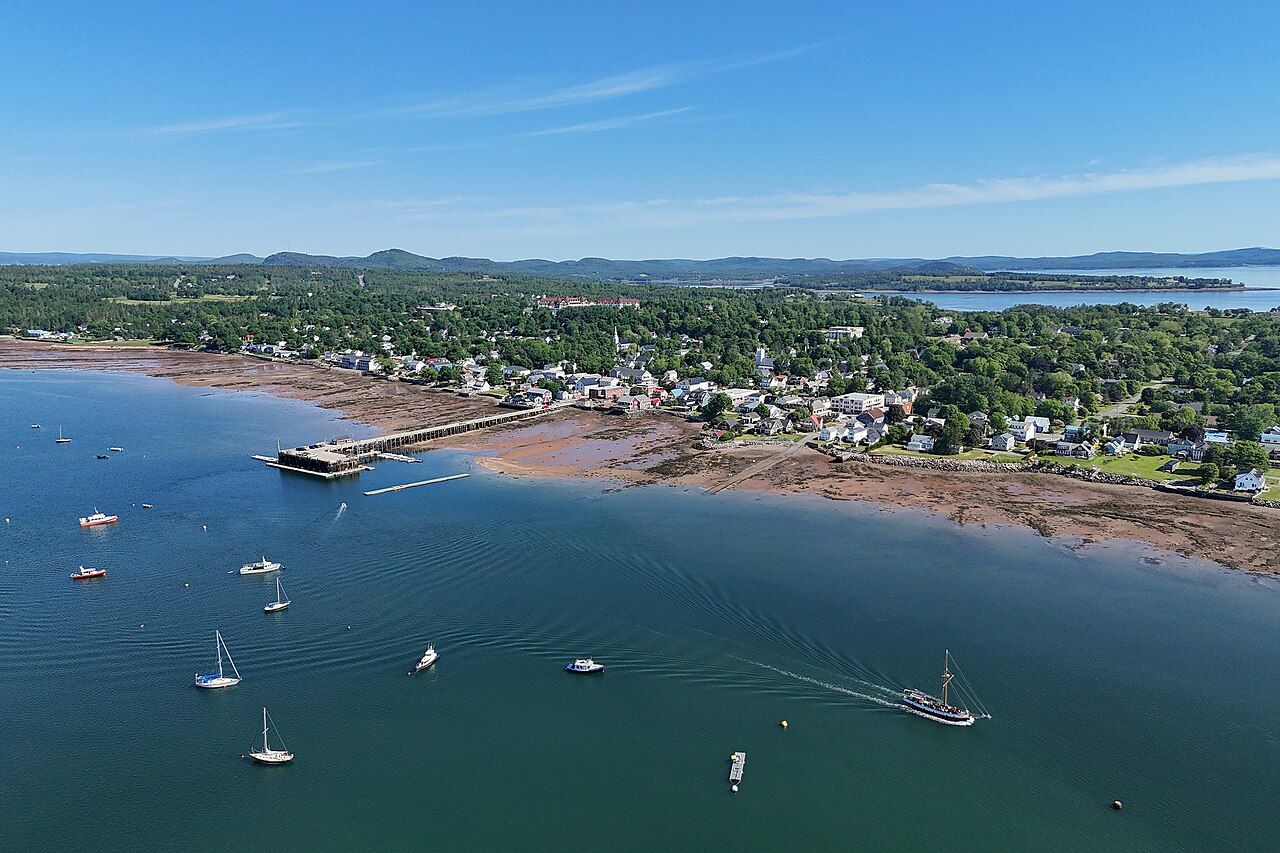
A Loyalist town laid out in a neat grid on a peninsula in Passamaquoddy Bay, with old houses, a long wharf and an island you can drive to only when the tide is out.
St Andrews · from Saint John: About an hour and a half
Tide note The bar to Ministers Island is under several metres of water at high tide. Cross only in the posted window around low tide and leave time to return.
St Andrews sits at the end of a narrow peninsula reaching into Passamaquoddy Bay, close to the border with Maine. It is one of the oldest towns in New Brunswick and one of the best preserved, with a street grid laid out in the eighteenth century and hundreds of old wooden houses still standing on it. For more than a century it has also been a summer resort, and the two sides of its history sit easily together. It makes a good base for the western Fundy shore and the islands.
A Loyalist town
St Andrews was founded in 1783 by Loyalists, people who had sided with Britain during the American Revolution and left the new United States when the war was lost. Many came from Castine, on the Penobscot River in Maine, which they had expected to remain British. When the border was settled farther east, some of them took their houses apart, loaded them onto boats and rebuilt them on the new town site across the water. A few of those houses are still standing in the town.
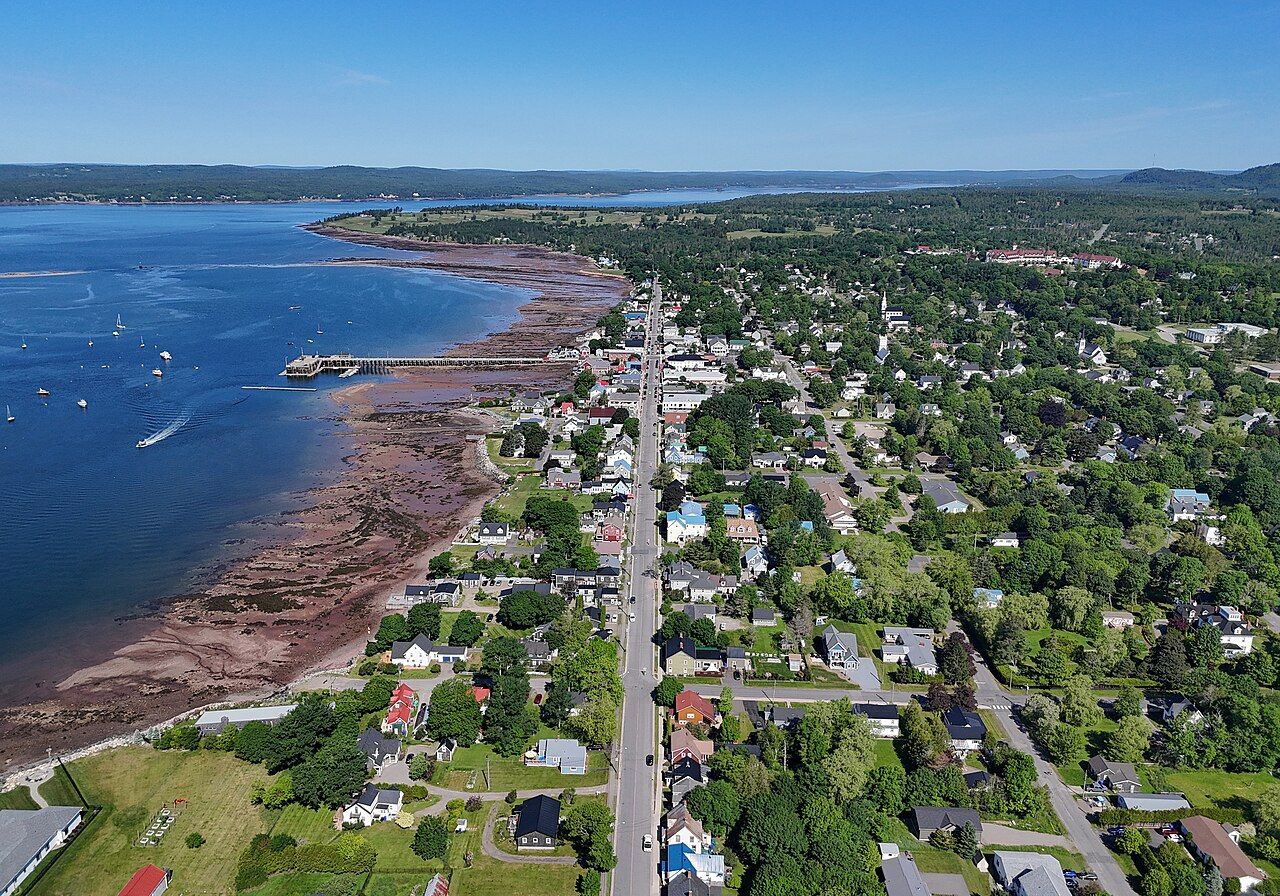
The town was laid out on a regular grid of streets and blocks running down to the water, a plan that has survived almost intact. Much of the old town is a National Historic District, and walking its streets you pass houses from the late eighteenth and nineteenth centuries, many with plaques showing when they were built and for whom.
Walking the old town
Water Street runs along the harbour and is the town's main street, lined with old commercial buildings. The long town wharf reaches out into the bay from its middle, and from the end you can look back over the shore and out to the islands. At low tide the mudflats stretch far out from the shore, and boats in the harbour sit on the bottom or on their moorings in the channel.
Inland from Water Street, the quieter residential streets climb gently uphill. Look for Greenock Church, built in the 1820s, with a carved green oak tree on its tower, and for the old county courthouse and jail, built in the 1830s and 1840s. The town's churches, houses and gardens make for a slow morning on foot.
On the rise above the town stands a large Tudor-style resort hotel, built for the summer visitors who began arriving by train in the late nineteenth century. Its long red roofs and gables are visible from much of the bay and give the town its familiar skyline.
The blockhouse and the lighthouse
At the western end of the town, near the shore, the St Andrews Blockhouse is a square wooden fort built during the War of 1812, when the town's people feared attack from across the border. It is a National Historic Site, one of the few blockhouses of that war still standing in Canada. The grounds are open to walk around, and the opening times for the inside are seasonal.
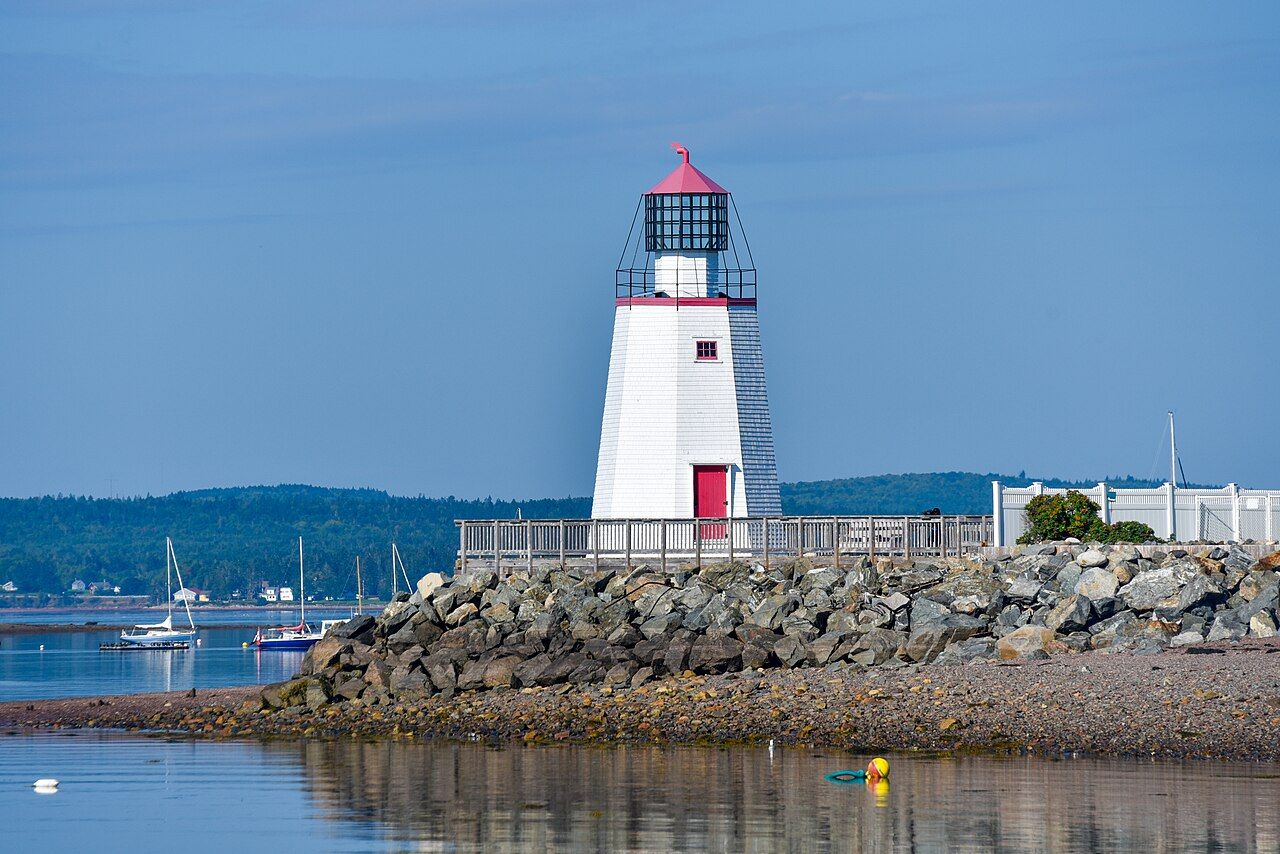
At the northern tip of the peninsula, the small Pendlebury Lighthouse, also known as St Andrews North Point lighthouse, stands at the edge of the shore. Built in the 1830s, it is a short, white, tapering wooden tower, and it makes a fine stop at the end of a walk, especially early in the morning or at sunset.
Ministers Island at low tide
Just off the shore of St Andrews lies Ministers Island, once the summer estate of William Van Horne, the railway builder who led the construction of the Canadian Pacific. It is reached by a gravel bar across the seabed that is exposed only around low tide. At high tide the bar lies under several metres of water. When the tide is out, cars and people cross the sea floor on the bar to reach the island.
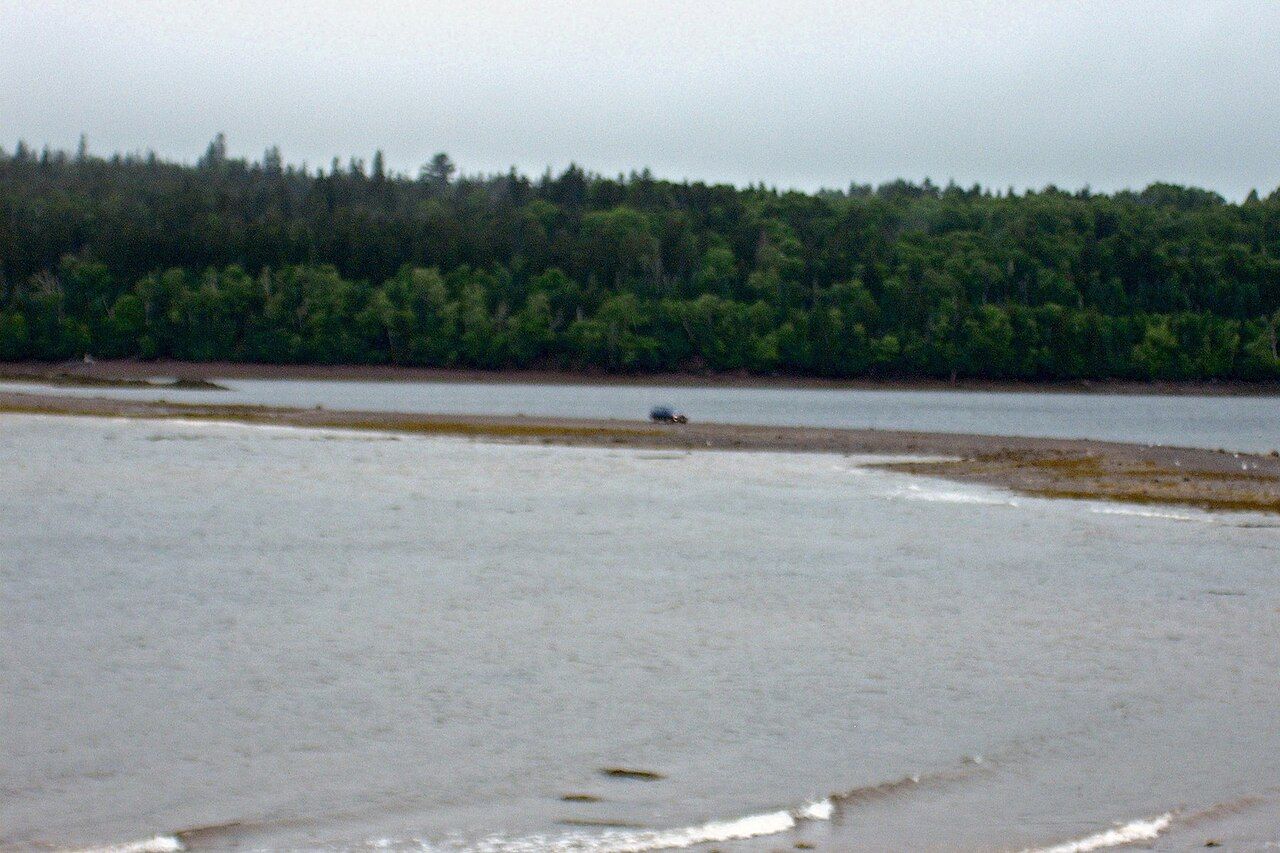
The island is a provincial historic site. Van Horne's large summer house, a barn and a bathhouse on the shore stand among fields and woods, and trails lead around the island through forest and along the coast. Visits are seasonal and the opening hours follow the tide, changing each day. Check the times before you go, and leave yourself plenty of time to cross back before the water returns. A car stranded on the bar is lost to the sea within hours. For how the bay's tides work, see understanding the highest tides.
A car stranded on the bar is lost to the sea within hours.
On the water and around the bay
Whale-watching boats and other trips run from the town wharf in summer and early autumn, heading out through Passamaquoddy Bay to the islands and the outer bay where finback, minke and humpback whales feed. Trips depend on the weather, and fog is common. Dress warmly and keep your expectations open. The animals and the rules for watching them are covered in whales of the Bay of Fundy.
Kayaking in the sheltered waters near town is popular, but the currents in Passamaquoddy Bay are strong and the water is cold all summer. Paddle with experience or with a guide, and check the tide before you leave.
St Andrews is also a good starting point for exploring further along the coast. St Stephen and the St Croix River, where one of the first European settlements in North America was attempted in 1604, lie a short drive north and are covered in St Stephen and the St Croix border. To the east, the ferry to Deer Island leaves from Letete, about half an hour away.
The road from Saint John
- St Andrews is about an hour and a half from Saint John by road.
- Summer is busy; spring and early autumn are quieter and often clearer.
- Check the tide before planning a visit to Ministers Island.
- Many places to eat and stay close or shorten hours outside summer.
- Bring a light jacket: evenings by the bay are cool even in July.
Give St Andrews at least a full day, with one walk through the old town, one stretch on the water or along the shore, and a crossing to Ministers Island timed to the tide. It is a town that rewards walking slowly and looking closely.
Time the visit with the tide in mind. If low water falls in the morning, start with Ministers Island and leave the old town for the afternoon. If it falls late in the day, walk the streets and the wharf first, then cross the bar in the evening light. Either way, look up the tide the night before, keep an eye on the clock while you are on the island, and treat the crossing time as fixed. The bay keeps its own schedule, and the town has always lived by it.