St Stephen and the St Croix border
A border town that faces Maine across a narrow tidal river, and a small island downstream where French settlers spent a hard first winter in 1604.
St Andrews · from Saint John: About ninety minutes west by road
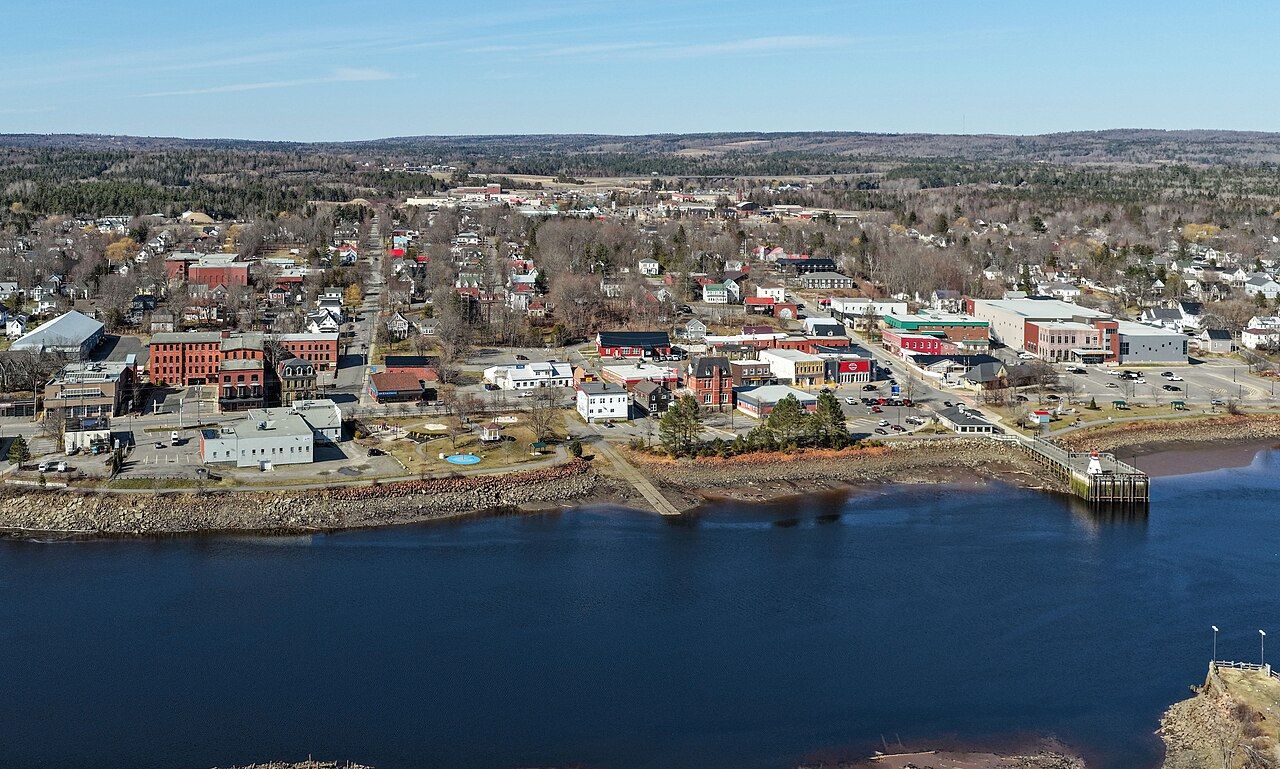
Tide note The St Croix still rises and falls with the bay at St Stephen. Mud banks below town are soft and slippery; stay off them as the tide turns.
St Stephen sits on the last stretch of the St Croix River before it widens into Passamaquoddy Bay. Across the water, close enough to read a street sign on a clear day, is Calais, Maine. For most of the town's life the river has been less a line than a seam: families, mill workers and shoppers crossed it daily, and the two places grew up looking at each other. You come here for that border feeling, for a walk along the river, and for the short drive down to the island where European settlement in this part of North America began.
A town that faces another country
The town was laid out by Loyalists in the 1780s and grew on timber, shipbuilding and later manufacturing. Brick blocks along the main streets date from the late nineteenth century, when the river powered mills upstream and schooners loaded lumber below. A long chocolate-making tradition still shapes the town's sense of itself, and a summer festival celebrates it each year.
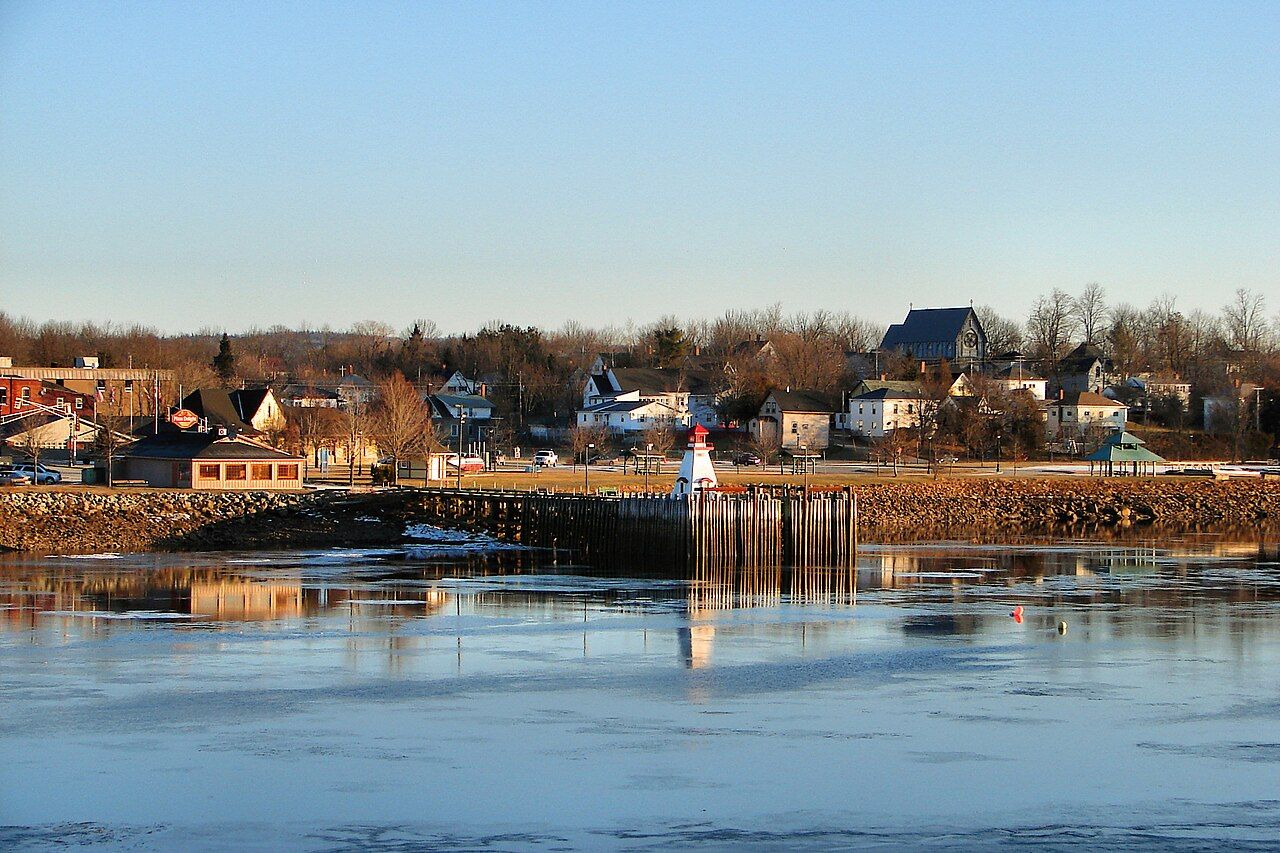
The riverfront is the place to start. A paved path follows the bank past a small lighthouse-style marker and a wharf, with the Calais shore directly opposite. In late afternoon the low sun lights the Maine side and throws the town's reflection onto the water. On a cold winter morning the river can carry plates of ice that rise and fall with the tide.
Crossing the border
Several bridges link St Stephen with Calais and the nearby community of Milltown. The downtown crossing puts you almost straight onto the main street on the far side; a newer crossing outside town handles most trucks and through traffic. Wait times vary with the hour, the day and the season, and long weekends on either side of the border can bring queues.
Treat the crossing as an international journey, because it is one. Carry a passport or another accepted travel document, know what you can and cannot bring back, and expect questions about where you are going. Rules on food, plants, firewood and pets change from time to time. If you are touring both sides of the bay, a loop through Maine and back over the bridge to Campobello Island is common, and it means two crossings in one day.
Saint Croix Island and the winter of 1604
Downstream, the river opens into a wide estuary, and in the middle of it sits a small wooded island. In the summer of 1604 a French expedition led by Pierre Dugua, with Samuel de Champlain among its members, chose it as a defensible place to settle. They built houses, a storehouse and gardens. Then winter came early. Ice moving with the tide cut the island off from fresh water and firewood on the mainland, and scurvy spread through the camp. Nearly half of the men died before spring.
The survivors moved across the bay to Port Royal the following year, but the island's place in history was fixed. It is now an international historic site shared by Canada and the United States. The island itself lies on the American side of the boundary and is protected; visitors do not land on it. Instead you look across from the shore.
On the New Brunswick side, a viewing site near Bayside, on the road between St Stephen and St Andrews, has a short trail, interpretive panels and a clear view over the water to the island. The Maine side has its own trail with figures that tell the story of the settlers. Either way, bring binoculars. The island is small and low, and from shore it is easy to underestimate how exposed those first settlers were, with the tide racing past on both sides and nothing between them and a northern winter.
The river and its tides
The St Croix is a tidal river as far up as the town. Twice a day the bay pushes water back up the estuary, and twice a day it drains away, leaving banks of grey-brown mud and weed-covered rock. The range here is smaller than at the head of the bay, but still large enough to change the look of the waterfront within a few hours.
That matters if you go down to the water's edge. The mud below the riverbank is soft and can hold a boot, and the incoming tide fills low channels quietly. Keep to firm ground, watch children closely and do not try to walk out to anything you can see on the flats. If you want to understand why the water moves the way it does, the bay-wide picture is in the story of the highest tides.
Birdwatchers do well along the estuary. Ospreys and bald eagles hunt over the river in summer, and the marshes downstream draw shorebirds on migration in late summer and autumn.
A day around the border
St Stephen works as the first or last stop of a trip along the western Fundy shore. A simple day might look like this:
- Morning walk along the St Stephen riverfront, with a look across at Calais.
- Drive down the estuary to the Saint Croix Island viewing site and walk the short trail.
- Continue to St Andrews for the afternoon, and time a visit to the Ministers Island bar with the low tide.
- Evening back on Route 1, or on toward Blacks Harbour if you are catching an early ferry the next day.
Distances are short, but the border and the tides are the two things that can rearrange your plans. Check crossing requirements, and check the tide table for St Andrews if you plan to drive the bar to Ministers Island.
When to come and what to expect
Summer is the busiest time on both sides of the river, with long evenings and the island viewing sites fully open. September and early October are often clearer and calmer, and the hardwoods along the river turn colour. Winter is quiet and cold, and some seasonal facilities close; the town itself carries on as a working border community all year.
Fog is less of a feature here than out on the islands, but on a damp summer morning the estuary can fill with mist that clears by midday. If you are heading on to the ferries and island roads, allow extra time on foggy days. And keep an eye on the clock at the border: a crossing that takes five minutes on a Tuesday morning can take far longer on a holiday weekend.
St Stephen rewards an unhurried look rather than a checklist. Stand on the riverbank, watch the tide move past two countries at once, and then drive down to the island that started it all.