Swallowtail and the North Head shore
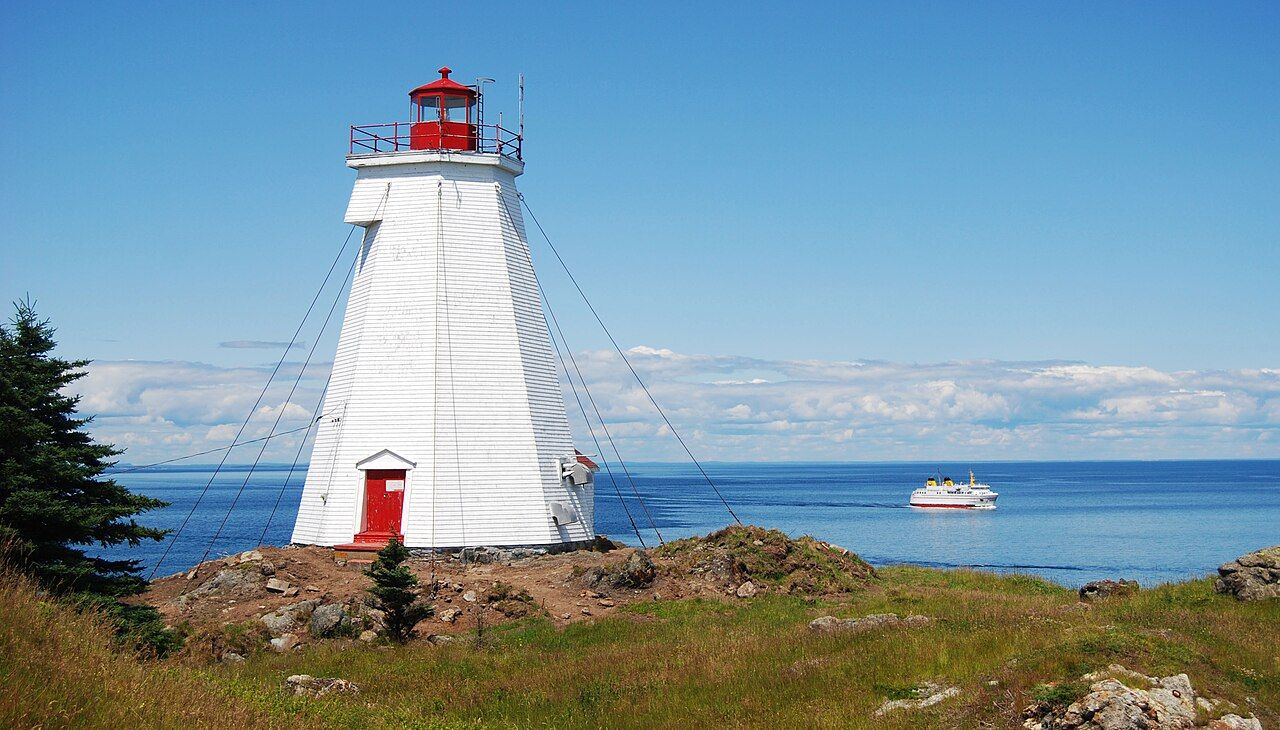
A white wooden lighthouse on a narrow headland above North Head, with a footbridge, a long view of the ferry lane and seals hauled out on the ledges below.
Grand Manan · from Saint John: About an hour, then the ferry
Tide note Seals haul out on the ledges below the headland. Watch from the top, keep your distance and never try to reach the ledges, where the tide rises fast.
Swallowtail is often the first place people walk to on Grand Manan, and for good reason. The lighthouse stands on a narrow arm of rock just south of the ferry terminal at North Head, white against the sea, with a red door and lantern. From the headland you can watch the ferry come in, look down on seals resting on the ledges and follow the coast in both directions. It is a short outing, but many people come back to it more than once during a stay.
The headland and the light
The headland takes its name from its shape: seen from the water, the point splits in two like the tail of a swallow. A lighthouse has stood here since 1860, guiding boats into North Head and marking the northern approach to the island. The tower is wooden and tapering, with guy wires anchoring it against the wind, and the keeper's house stands close by.
The light is automated now, as are the other lights around the island, and the keeper's house has been restored. Whether the buildings are open, and on what days, changes from year to year. The grounds and the view are the main thing in any case.
The footbridge and steps
From the parking area above the harbour, a path leads down a set of wooden steps and across a short footbridge over a gully cut into the rock. On the far side the path climbs gently to the lighthouse. The walk is short, but the steps can be wet and slippery in fog or rain, and in wind the bridge feels exposed. Wear shoes with grip and hold the rail.
Once you reach the headland, the ground is uneven and the edges are not fenced everywhere. The rock drops steeply to the water on three sides. Keep children close and stay on the worn paths rather than heading out toward the edge for a better view.
The best views come from the open grass around the tower, not from the edge.
The best views come from the open grass around the tower, not from the edge.
The ferry coming in
The ferry lane from Blacks Harbour passes close to the headland, and watching the boat round the point and slide into North Head is a small ritual for many visitors. If you know when a ferry is due, arrive a little before and wait on the grass. The view takes in the harbour, the wharves and the fishing boats, and on a clear day the low line of the mainland far to the north.
Coming in on the ferry yourself, look for the lighthouse to starboard as the boat slows. It is often the first building on the island you can pick out, and in fog its outline appears and fades as you pass. For more on the crossing and the roads beyond, see ferries and roads around the bay.
Seals on the ledges
Below the headland, rocky ledges cover and uncover with the tide. At lower water, harbour seals and grey seals often haul out to rest on them, lying in rows like loaves and lifting their heads when a boat passes. From the top, with binoculars, you can watch them for a long time without disturbing them.
Do not try to climb down toward the ledges. The rock is steep and wet, and the tide in this part of the Bay of Fundy rises by several metres in about six hours, covering ledges that look dry and solid. Seals on land are resting, not stranded. If you come across a seal pup alone on a beach anywhere on the island, leave it where it is and keep well back, as the mother is usually nearby.
In summer and early autumn, it is worth scanning the water beyond the ledges too. Porpoises surface in the tide rips off the point, and on some days the blow of a minke or finback whale shows farther out. A pair of binoculars turns a pleasant view into a long watch. The animals that feed off the island are described in the guide to whales of the Bay of Fundy.
Along the North Head shore
Swallowtail is the start of a longer coastal walk. A footpath leads south from the lighthouse area along the cliffs toward Whale Cove and beyond, part of the trail system that runs down much of the island. North of the ferry terminal, a road and then a trail lead toward Long Eddy Point and its light, known locally as the Whistle for the old fog signal. That northern tip is a good place to watch the water, as the tide runs hard around the point and draws feeding birds and sometimes whales.
Between the two, Hole-in-the-Wall is a short walk away, a natural arch of rock on the shore. Together these places make an easy first day on the island. For the longer routes south along the clifftops, read walking the Grand Manan cliffs, which covers fog, edges and how long each section takes.
Light, weather and the time of day
Swallowtail changes with the weather more than most places on the island. On a clear summer morning the tower stands bright against blue water, and the light falls across the harbour behind it. In the evening the sun drops behind the island and the headland goes into shadow while the sea beyond still holds the light. Autumn brings sharper air, longer views and fewer people on the path.
In fog the place feels very different. The tower comes and goes in the grey, the sound of the sea rises from below, and the ferry's horn carries across the water before the boat itself appears. A foggy walk out to the lighthouse is short and safe if you keep to the path, and many people find it the most memorable visit of all. Just take extra care on the steps and the bridge, and do not wander toward the edges when you cannot see where they are. The patterns of summer fog are described in fog, light and the Fundy seasons.
Wind is the other thing to watch. The headland stands out in the path of the weather, and on a blustery day gusts sweep across the open grass. Hold on to hats, cameras and small children, and choose a calmer hour if the wind is strong.
Parking above the steps
- Parking above the steps is limited in summer, so walking from the harbour is often easier.
- Early morning and evening bring softer light and fewer people.
- Fog can roll in quickly even on a bright day; the steps and bridge become slick.
- There are no railings along most of the headland edge.
- Seals and seabirds should be watched from above, never approached.
Swallowtail is small, close and easy to reach, and that is part of its appeal. Give it an hour on arrival and another at the end of a stay, and you will see the island's front door in two different lights.