Dark Harbour and the dulse gatherers
The only road to Grand Manan's west shore ends at a cove closed by a wall of stones, where a red seaweed has been picked from the rocks at low tide for generations.
Grand Manan · from Saint John: About an hour, then the ferry
Tide note Dulse grows on rocks that are exposed only around low tide. The water returns quickly here; never wander out onto the ledges without knowing the time of the turn.
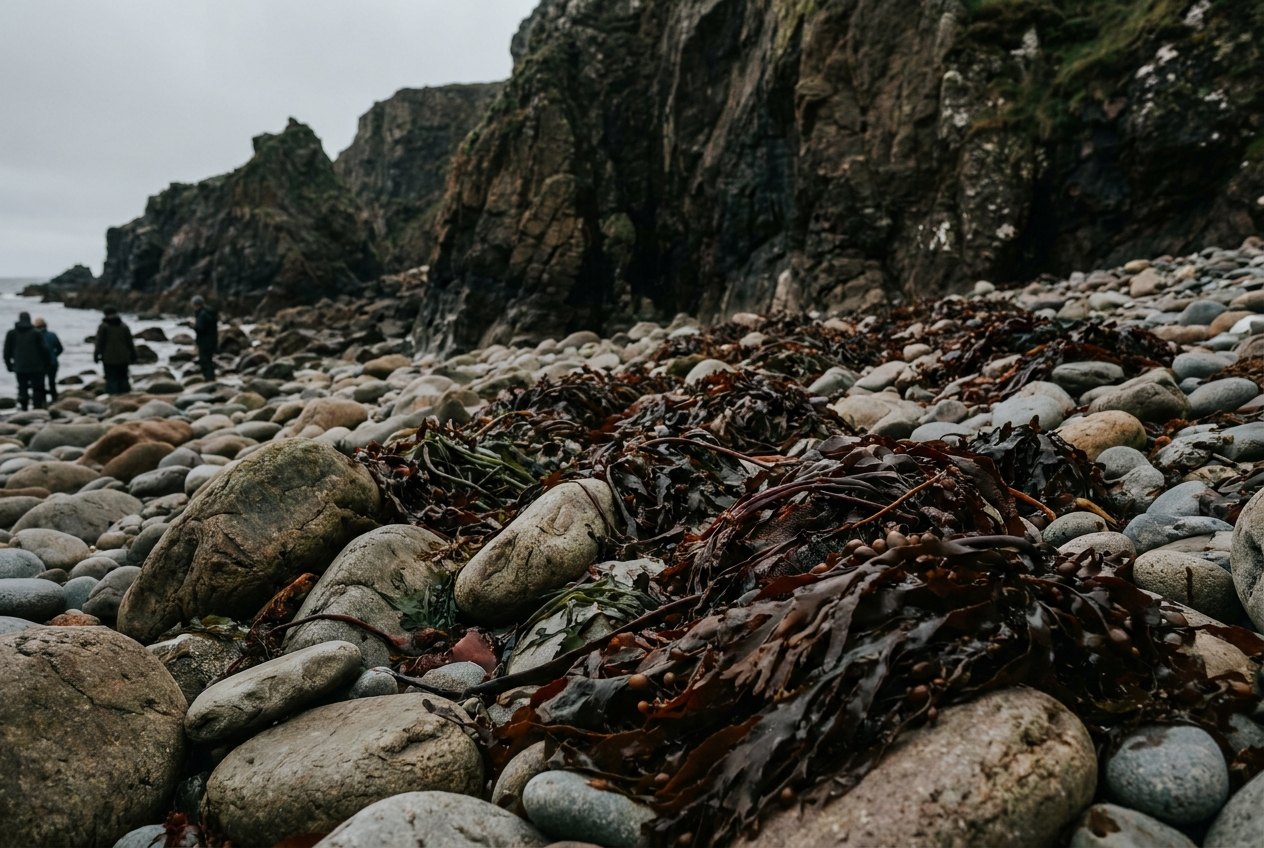
Most of Grand Manan's western shore is cliff, a dark wall of rock with the sea at its foot and no easy way down. Dark Harbour is the exception. A single road crosses the island from the east side and drops steeply through the woods to a cove on the western shore, where a long bank of stones closes off a pond of still water from the open bay. It is one of the quietest corners of the island, and it is known across the Maritimes for one thing: dulse.
The road down
The road to Dark Harbour leaves the main road in the middle of the island and runs west across the middle of the island through spruce and birch. As it nears the western shore it tips down a long, steep grade toward the water. Drive it slowly, in a low gear on the way down, and watch for people walking and for trucks coming up. In fog the descent can feel like dropping into a cloud.
At the bottom you come out beside the harbour. There is no village here in the usual sense, only a scatter of small camps and sheds along the stony bar, used by people who work the shore in summer. Park where you are not blocking anyone and walk.
The harbour and the seawall
The cove takes its name from the shadow of the high cliffs around it. The open bay is closed off by a natural seawall of rounded stones thrown up by storms, with a narrow gap where the tide flows in and out. Behind the wall lies a sheltered pond, where small boats sit calmly while the bay outside heaves. On the bay side the stones fall steeply to the water.
The western shore takes the weather straight off the open Gulf of Maine, and waves can be heavy here even on a calm day on the east side. Keep off the seaward side of the wall in any swell, and keep children well back from the water's edge. The stones roll underfoot and the backwash is strong.
What dulse is
Dulse is a red seaweed that grows on rocks in the lower part of the intertidal zone, the band of shore that is covered at high tide and exposed at low. Fresh from the water it is a deep red-purple, with flat, leathery fronds. Dried, it turns darker and slightly crisp, and has a salty, savoury taste that people tend either to enjoy at once or never take to.
In the Maritimes, dried dulse has long been eaten as a snack straight from the bag, much as other people eat crisps. It is also crumbled into chowder, scrambled eggs or bread, or toasted briefly in a dry pan. Grand Manan dulse, and Dark Harbour dulse in particular, has a reputation that reaches well beyond the island. For how it fits into the wider food of the region, see lobster, dulse and the Fundy table.
Picking at low tide
Dulse is gathered by hand, and only around low tide, when the rocks where it grows lie exposed. The pickers work the ledges along the western shore as the water falls, filling bags or baskets, and some cross the harbour in small boats to reach the best rocks. The season runs through the warmer months, and the work depends on the timing of the tides, so the hours shift a little every day.
The Bay of Fundy's tides are large even at its mouth. Around Grand Manan the water rises and falls by several metres, and at the bottom of a big tide whole ledges appear that are under water for most of the day. Those same ledges are covered again within a few hours. The people who pick dulse know these rocks and these tides. A visitor walking out to look does not, and the slippery weed and steep stones make a quick retreat hard. For how the tides work and how to read a tide table, see understanding the highest tides.
Drying in the open air
After picking, the dulse is spread out to dry in the sun and wind, traditionally on the stones of the seawall or on nets laid over them. On a good drying day in summer you may see broad patches of dark red laid out across the bar. The weed is turned and gathered as it dries, then packed. Drying depends on the weather: a day of fog or rain means waiting.
The drying areas belong to the people who use them. Look from the road or the path, do not walk across the spread dulse, and ask before taking photographs of anyone at work. Dried dulse is sold on the island in shops and at roadside stands in summer, and that is the right way to take some home.
Visiting well
- The road down is steep: use a low gear and go slowly.
- Check the tide before you arrive; low water is when the shore is busiest.
- Stay off the ledges and the seaward side of the wall.
- Do not pick dulse from working areas or walk on drying weed.
- Bring a warm layer: the west side is often cooler and windier.
Sunset is another reason to come. Dark Harbour faces west, one of the few places on Grand Manan where you can watch the sun go down over open water from the shore. Leave yourself enough light for the drive back up, and allow time to stop at the top of the grade. Dark Harbour is not large, and there is little to do except watch the water, the light on the cliffs and the slow work of the shore. That is the reason to come. Pair it with a day on the trails above the western cliffs, described in walking the Grand Manan cliffs, and you will have seen both faces of the island's wild side.