Puffins and seabirds of the outer bay
A small, treeless island south of Grand Manan holds one of the region's best-known puffin colonies, and the waters around it fill with seabirds through the summer.
Bay-wide · from Saint John: About an hour, then the ferry
Tide note Landings depend on swell and weather and are often cancelled. On the island, stay in the blinds and on the paths; the birds nest right beside them.
The outer Bay of Fundy, where the bay opens into the Gulf of Maine, is one of the richest places for seabirds on the Atlantic coast of North America. The great tides stir up nutrients from the seabed, plankton blooms, and fish and the birds that feed on them follow. For many visitors the bird that sums it up is the Atlantic puffin, and the place to see it is a small, rocky island south of Grand Manan.
Machias Seal Island
Machias Seal Island lies out in open water roughly midway between the southwestern tip of Grand Manan and the coast of Maine. It is low, treeless and rocky, only a few hectares in size, with a lighthouse and a few buildings near its centre. Both Canada and the United States claim it, a dispute that goes back more than two centuries, and Canada has kept lightkeepers on the island long after most other lights in the region were automated.
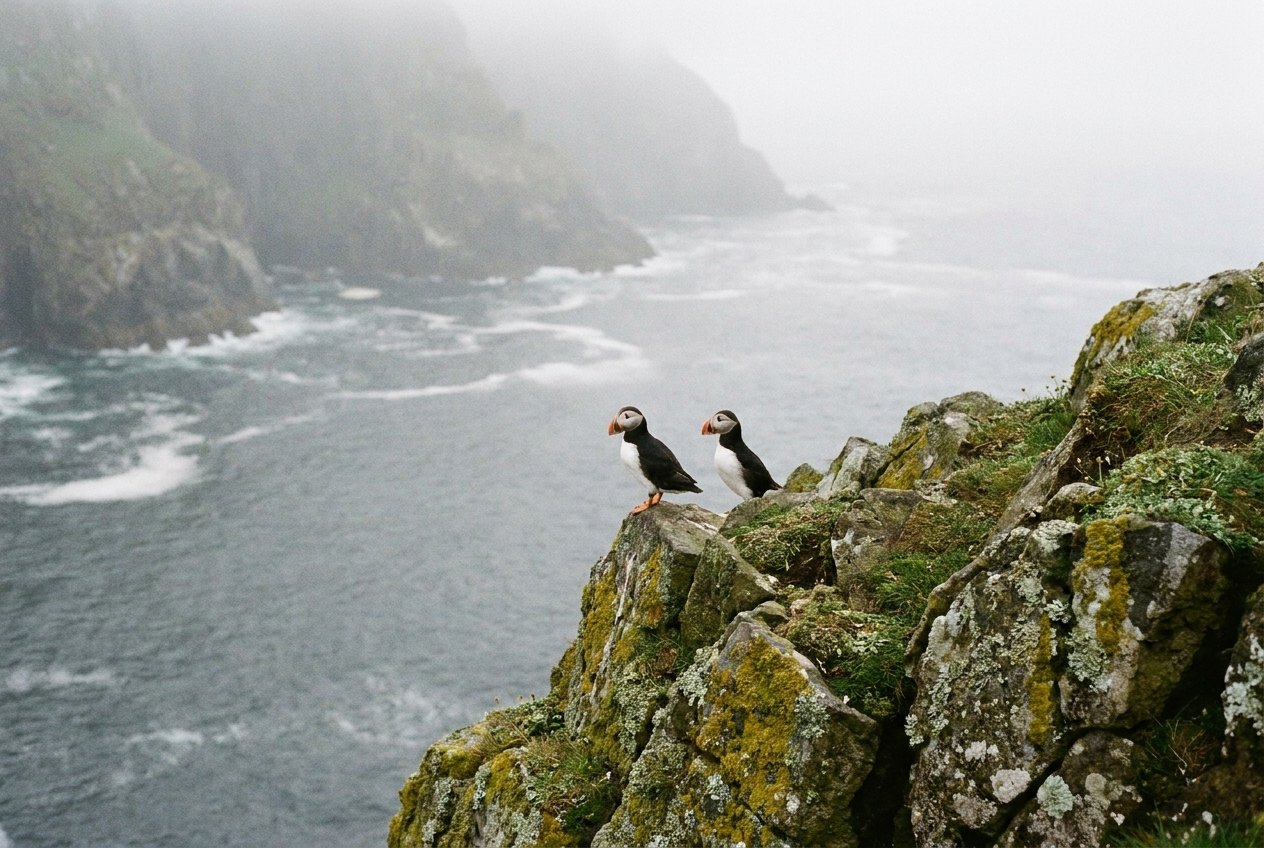
The island is a protected migratory bird sanctuary. Each summer it holds a large colony of Atlantic puffins, along with razorbills, common murres, and Arctic and common terns. The birds nest in burrows and crevices among the boulders and in the thin turf, often only a few metres from the paths and blinds.
How visits work
Getting onto the island is limited. A small number of licensed boats run trips in the nesting season from Grand Manan and from the Maine coast, and the number of people allowed to land each day is capped. Visitors are taken ashore in small boats when conditions allow and spend a set time in wooden blinds, small huts with viewing slots, where puffins and razorbills stand on the rocks close by.
Landing depends entirely on the sea. The island has no harbour, and in any swell it is unsafe to land, even on a calm-looking summer day. Many trips go out and circle the island without landing, and many are cancelled outright. Treat a landing as a bonus rather than a promise. Trips are long, the water is open and often rough, and the air is cold on the water even in July.
The puffins
Atlantic puffins spend most of the year far out at sea, coming to land only to breed. They arrive at the colony in spring, lay a single egg deep in a burrow or rock crevice, and both parents take turns feeding the chick. Through the summer you see them flying in low over the water with beaks full of small fish, usually hake, herring or sand lance, lined up crosswise. By about early August the chicks leave, and the adults head back out to sea, shedding the bright outer plates of the bill for the winter.
On land, puffins stand upright on the rocks, bob their heads and squabble at burrow entrances. In the air they whirr low and fast. Watching them from a blind at close range, you may find an hour passes very quickly. Photographs are easy, but keep the windows of the blind clear and your movements slow.
Razorbills, murres and terns
Razorbills are the puffin's larger, darker cousins, with a heavy black bill crossed by a thin white line. They nest among the boulders and often stand in small groups close to the blinds. Common murres, slimmer and browner, nest here in smaller numbers. Both dive deep for fish, using their wings to swim underwater.
The terns are a different matter. Arctic and common terns nest in the open on the island and defend their nests fiercely, diving at anyone who walks past and sometimes striking with their bills. That is one reason visitors keep to the paths and blinds, and it is a reminder that the island belongs to the birds for the summer.
Seabirds around Grand Manan
You do not need to land on Machias Seal Island to see seabirds. The ferry crossing from Blacks Harbour, and whale-watching trips out of Grand Manan, often pass rafts of birds feeding on the tide lines. Northern gannets fold their wings and plunge into the water. In late summer, shearwaters glide low over the swells, and red-necked phalaropes gather in large numbers where the currents meet. Black guillemots, with their white wing patches and red feet, are common close to the island's rocky shores. Whale trips and seabird trips often overlap, as described in whales of the Bay of Fundy.
From land, the clifftops of Grand Manan give a high viewpoint over the sea. With binoculars and patience, you can watch eiders and guillemots below the cliffs and gannets farther out. The routes along the cliffs are covered in walking the Grand Manan cliffs. The island's woods, marshes and shores also draw large numbers of songbirds and shorebirds in spring and autumn migration, and its bird history goes back to Audubon's visit in the 1830s.
Watching without disturbing
Seabird colonies are easily upset. Adults flushed from their nests leave eggs and chicks exposed to gulls and the cold, and a single careless approach can cost a nest. A few general principles apply wherever you see them:
- On Machias Seal Island, follow the instructions of the boat crew and the island staff exactly.
- Stay on paths and in blinds; burrows can collapse underfoot.
- From a boat or kayak, keep well away from cliffs and rocks with nesting birds.
- Do not use drones near colonies; they are restricted in sanctuaries.
- If birds take flight or start calling in alarm, you are too close: move back.
Puffin weeks in June and July
The best weeks for puffins are roughly from June into July, when adults are busy feeding chicks and come and go constantly. Late May and early August can work too, with fewer birds. Fog is common through this period and can cancel trips or limit what you see. Plan a few days on Grand Manan with flexible dates, and keep the morning of your trip open in case it is moved. For more on the island itself, see Grand Manan, the island at the mouth of the bay.