Hopewell Rocks at both tides
Tall sandstone pillars topped with trees stand on the sea floor at low tide and become small islands a few hours later. Seeing both is the whole point.
Fundy shore · from Saint John: About two hours by road
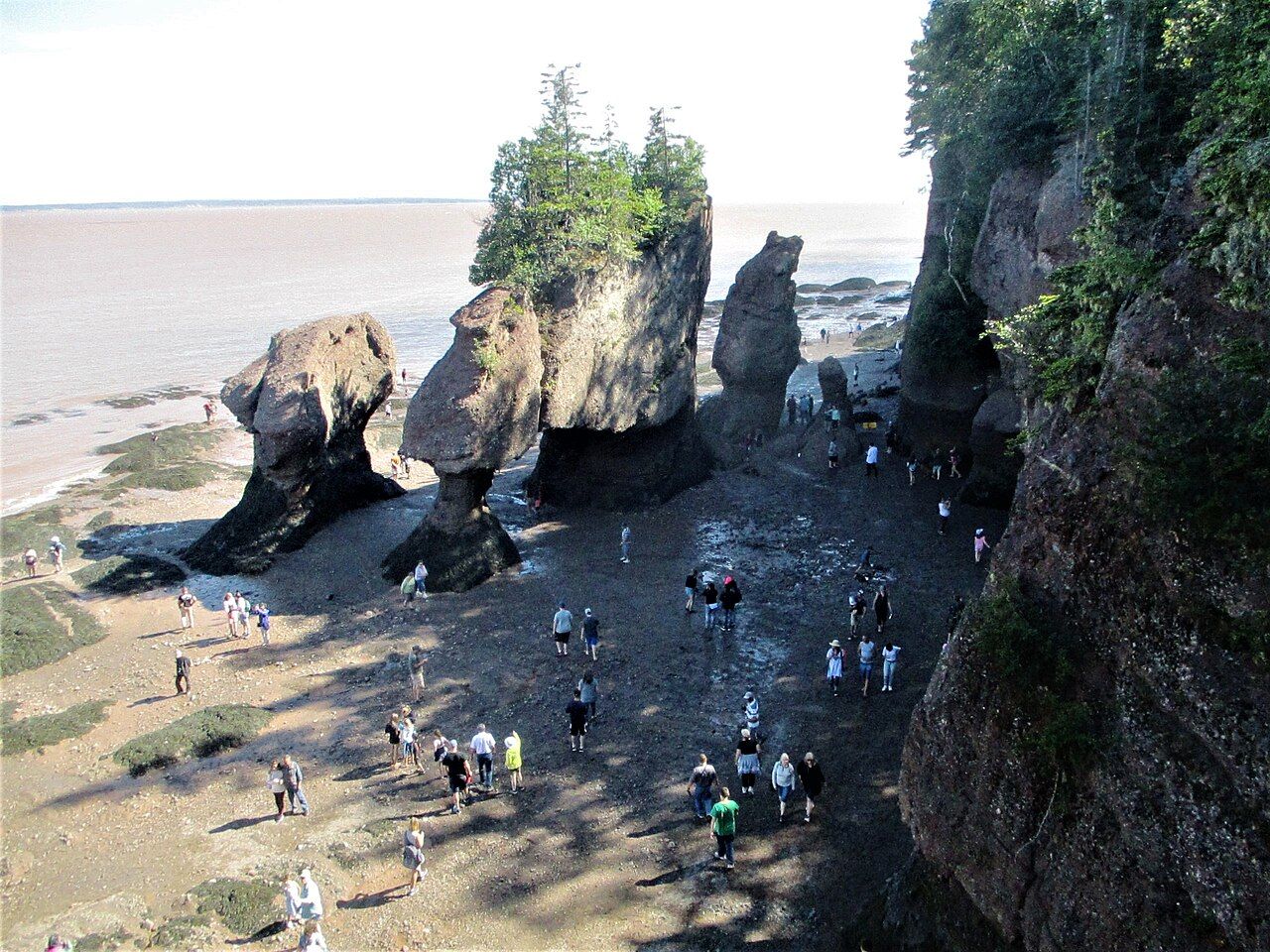
Tide note The sea floor is open only for a few hours around low tide. Leave when staff tell you to, and never climb the rocks or linger in the coves.
Near the head of the Bay of Fundy, on Shepody Bay, a line of red-brown cliffs has been carved by the tide into a row of tall pillars. Their bases have been worn narrow by the sea while their tops, still crowned with spruce and fir, stay wide. People call them the flowerpots. At low tide you walk among them on the sea floor, looking up at stone towers several storeys high. At high tide the water rises up their sides until only their upper parts show above the bay, and kayaks drift where you were walking a few hours earlier.
What the rocks are
The formations stand on the shore at Hopewell Cape, in a provincial park with a visitor centre, trails along the clifftop and stairs down to the beach. They are made of layered sandstone and conglomerate, a rock that erodes relatively easily. The bay's tides are among the largest in the world here, and twice a day they surge up against the cliffs. Over a very long time, the water has cut the cliff into separate stacks and undercut each stack at its base.
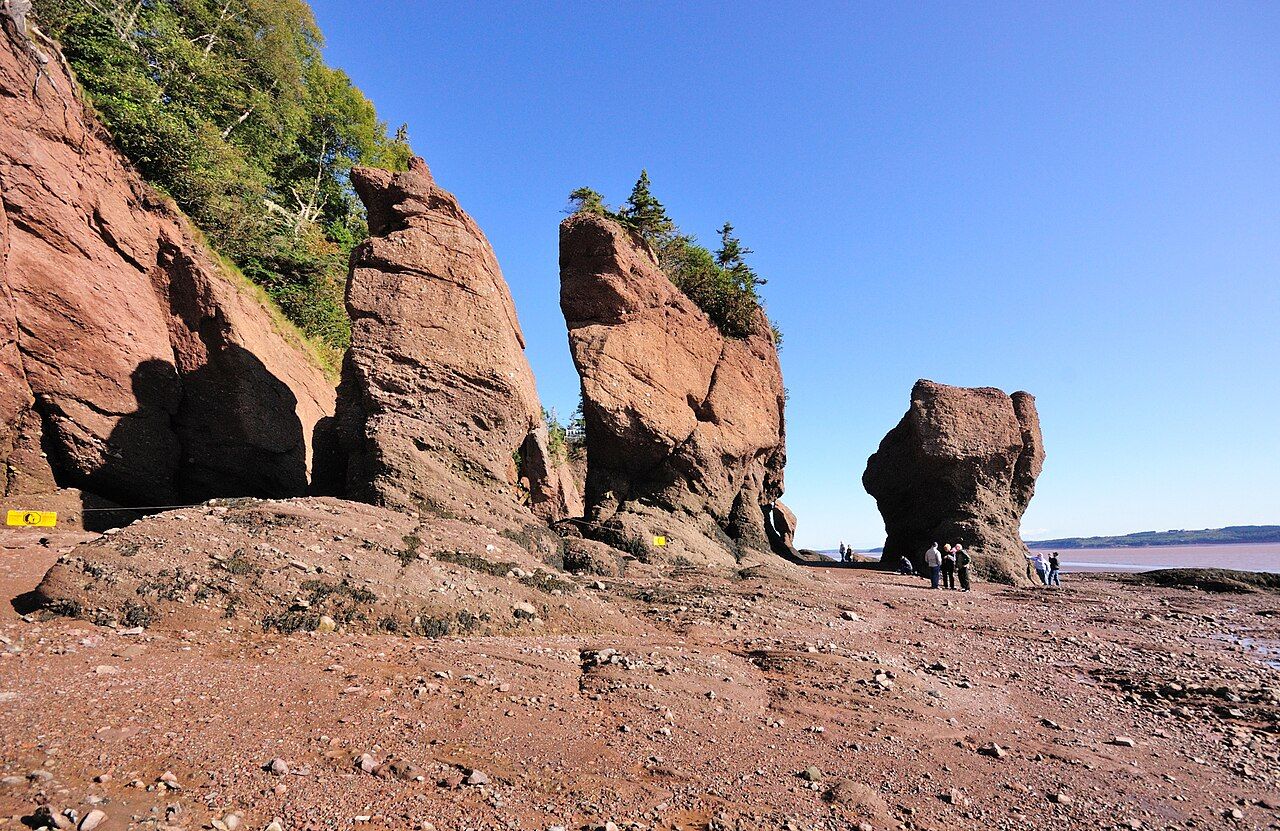
Several of the stacks have nicknames, given for their shapes: an arch, a figure with a face, animal outlines. The shapes change. Pieces fall every year, and in some years large parts of formations have collapsed. That is part of why the floor is open only at certain times and why you are asked not to climb or touch the rock.
Walking on the sea floor
For a few hours on either side of low tide, the beach below the rocks is open. You reach it by a long set of stairs from the clifftop. The floor is a mix of sand, gravel, rock and smooth red mud that can be very slippery, especially close to the water and around the bases of the stacks. Waterproof boots or shoes you do not mind getting muddy are the right choice.
The walk along the base of the cliffs takes you past the main flowerpots and into small coves between them. Light changes the colour of the stone through the day, from dull brown in overcast weather to warm red in late sun. Look at the bases of the stacks for the clearest sign of what the tide does: a dark band of weed and wet rock that shows how high the water climbs.
Timing and safety
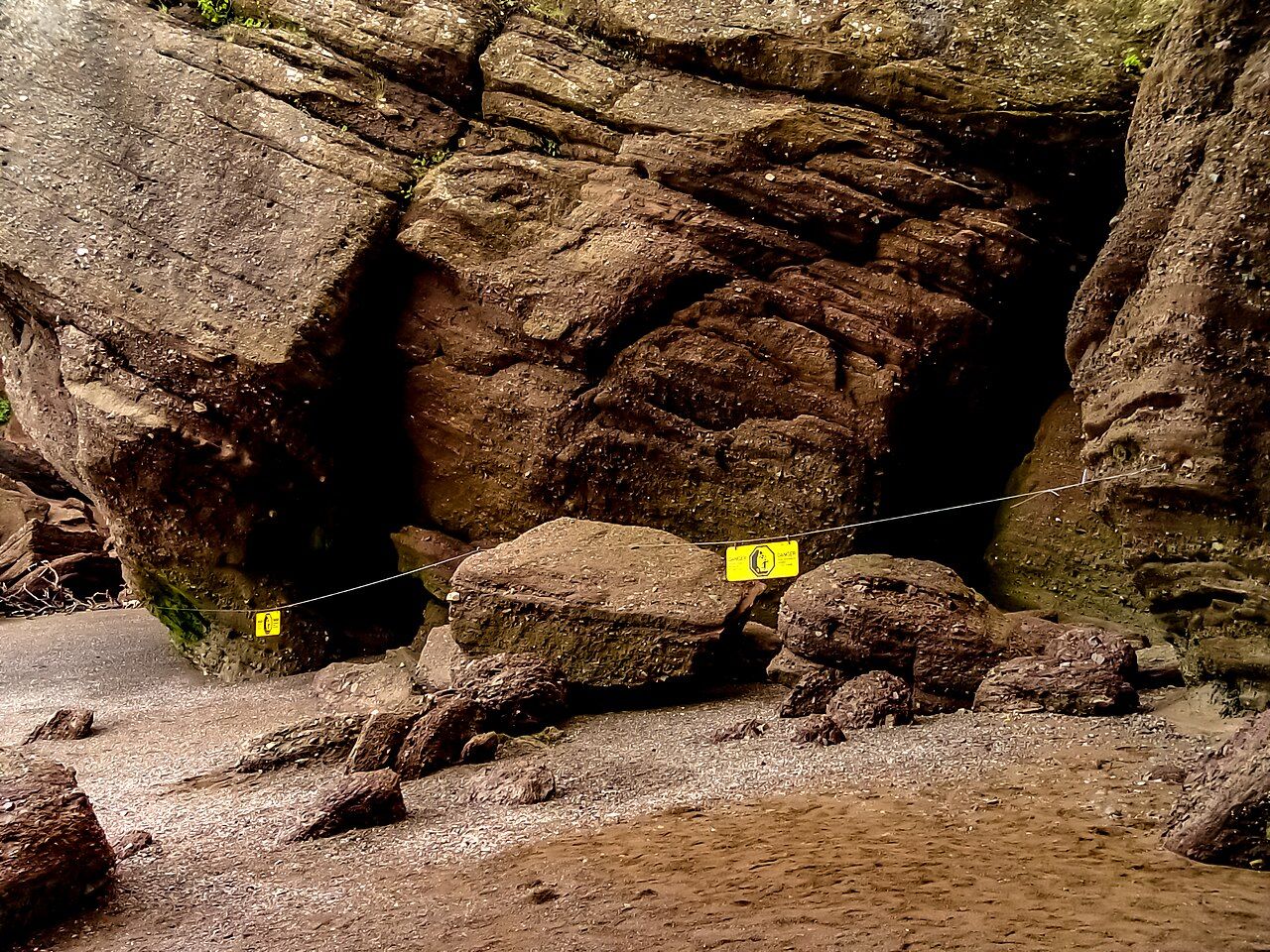
The tide here rises by more than ten metres on many days, and when it turns, it fills the beach steadily from the low end first. The coves and the far ends of the beach go first. The stairs are your only way off. That is why the park sets access times around each low tide and why staff move people off the floor before the water arrives.
Treat these as firm rules, not suggestions:
- Check the tide schedule for the day before you arrive, and plan to be on the floor early in the low-tide window.
- When staff say it is time to leave, leave. Do not stop for one more photo in a cove.
- Stay away from the base of the cliffs and out of roped-off areas. Rock falls are a real hazard.
- Do not climb on the formations, and do not let children climb either.
- Do not wander out across the open mud toward the water. It is soft and the tide comes back across it.
The whole bay's tide system is explained in understanding the highest tides, and the same care applies on every beach along this coast.
When staff say it is time to leave, leave.
Seeing the rocks at high tide
Come back at high tide and you will barely recognise the place. The water covers the sea floor and climbs well up the stacks, turning the flowerpots into small wooded islands surrounded by brown, silty water. From the clifftop lookouts you see the tops of the formations from above and the bay spreading out beyond them.
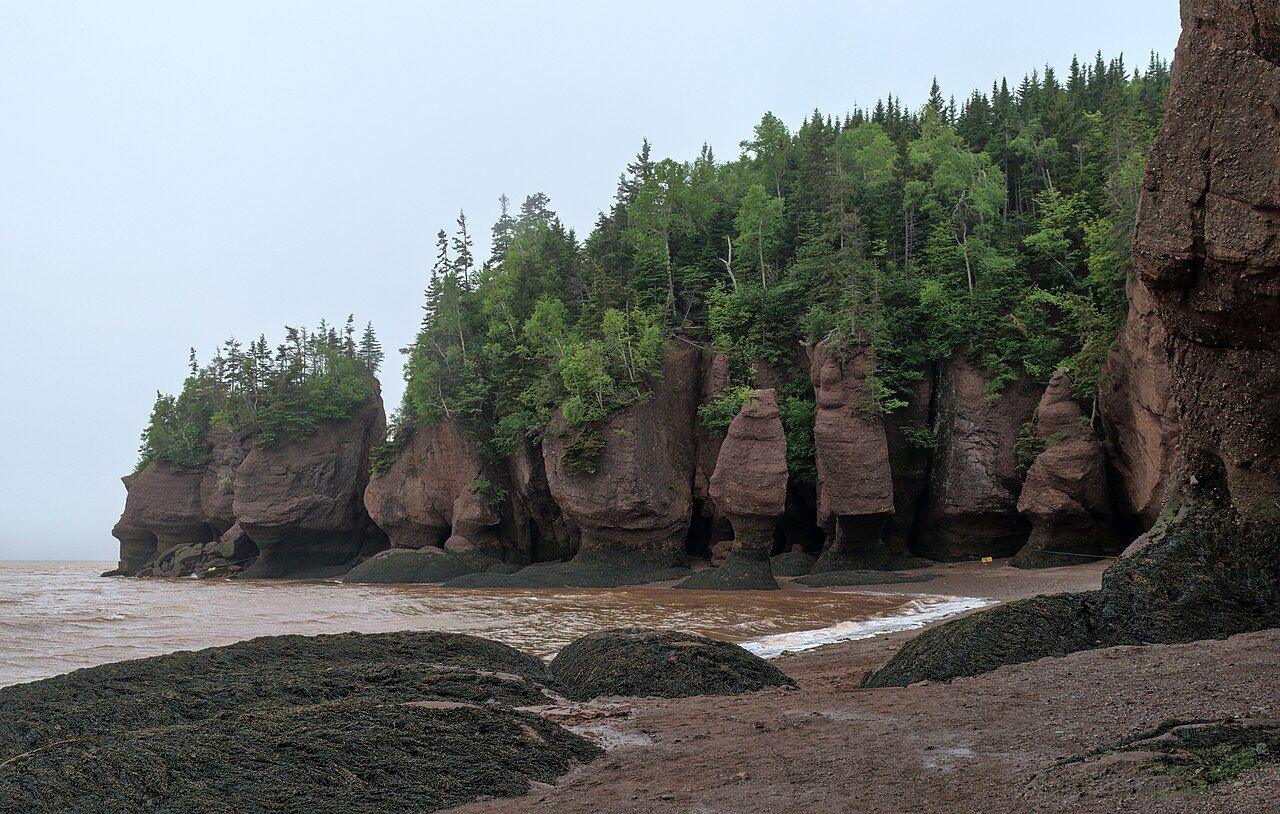
High tide is also when the water is deep enough for paddling. Guided kayak trips run from the beach in season, taking paddlers between and around the stacks. Go only with an organised group or with real sea-kayaking experience. The water is cold, the currents are strong, and conditions change with the wind.
Above the rocks
The time between tides is not wasted. A network of trails runs through the woods along the clifftop, with lookouts that let you look straight down onto the formations and out across Shepody Bay. From above you see how the stacks line up along the old cliff face and how the next generation of pillars is already forming, as cracks widen in the rock still attached to the shore. The visitor centre explains the geology and the tides, and it is a good place to check the access times for the next low water.
The colour of the water is part of the scene. The bay here is thick with red-brown silt, stirred up from the seabed and the mudflats by the tide twice a day. It looks muddy because it is; the sediment is what makes the flats around the head of the bay so wide and so soft.
Two tides, one ticket
The ideal visit sees both tides. Since high and low tide are about six hours apart, that means either a long day on site or two shorter visits. Admission has generally been structured so a ticket covers more than one visit day, which makes it easier to see the floor at low tide one afternoon and the high water the next morning.
The park is generally open from late spring to early autumn. Summer is busy, especially in the middle of the day. Arriving early or late in the low-tide window often means fewer people. The clifftop trails, lookouts and visitor centre are worth time on their own while you wait for the tide.
Hopewell Rocks sits on Route 114, which runs along the coast from Fundy National Park and Alma toward Moncton. Combining the two is easy. On the way, look out over the wide mudflats of Shepody Bay at low tide, where large numbers of shorebirds gather on migration in late summer. Farther on, in Moncton, the tidal bore on the Petitcodiac River offers another view of the same tide pushing upriver.
For a wider view of the whole region and how to move between its towns and islands, see ferries and roads around the bay. But give the rocks their time. Walk the floor at low water, come back to watch the bay arrive, and you will understand this coast better than any amount of reading can manage.